
In 2026, ethical AI in marketing has become a critical factor for brands looking to build trust and improve their digital presence. With AI shaping everything from ad targeting to personalised content, customers are more aware than ever that artificial intelligence influences what they see online. Brands that fail to be transparent risk eroding trust, damaging their reputation, and losing visibility in search results.
By embracing ethical AI practices, companies not only comply with evolving regulations but also strengthen their E-E-A-T signals—Experience, Expertise, Authoritativeness, and Trustworthiness—while boosting engagement, retention, and SEO performance. This guide explores why transparency in AI-driven marketing is essential, how it impacts customer trust and search visibility, and practical steps brands can take to implement it effectively.
Why Ethical AI in Marketing Is Now a Ranking and Trust Factor
Ethical AI in marketing has become essential for brands navigating 2026’s digital landscape. AI-driven marketing is no longer invisible to users—or Google. From ad targeting to content personalisation, customers are increasingly aware that artificial intelligence influences what they see. When brands fail to explain how AI is used, trust erodes fast.
In 2026, ethical AI in marketing is not just a compliance issue—it directly affects E-E-AT signals, brand credibility, and even long-term SEO performance. Search engines and large language models (LLMs) now favour transparent, trustworthy sources over opaque, automated systems. Brands practising AI transparency see measurable improvements in user engagement, retention, and search visibility.
What Is Ethical AI in Marketing?
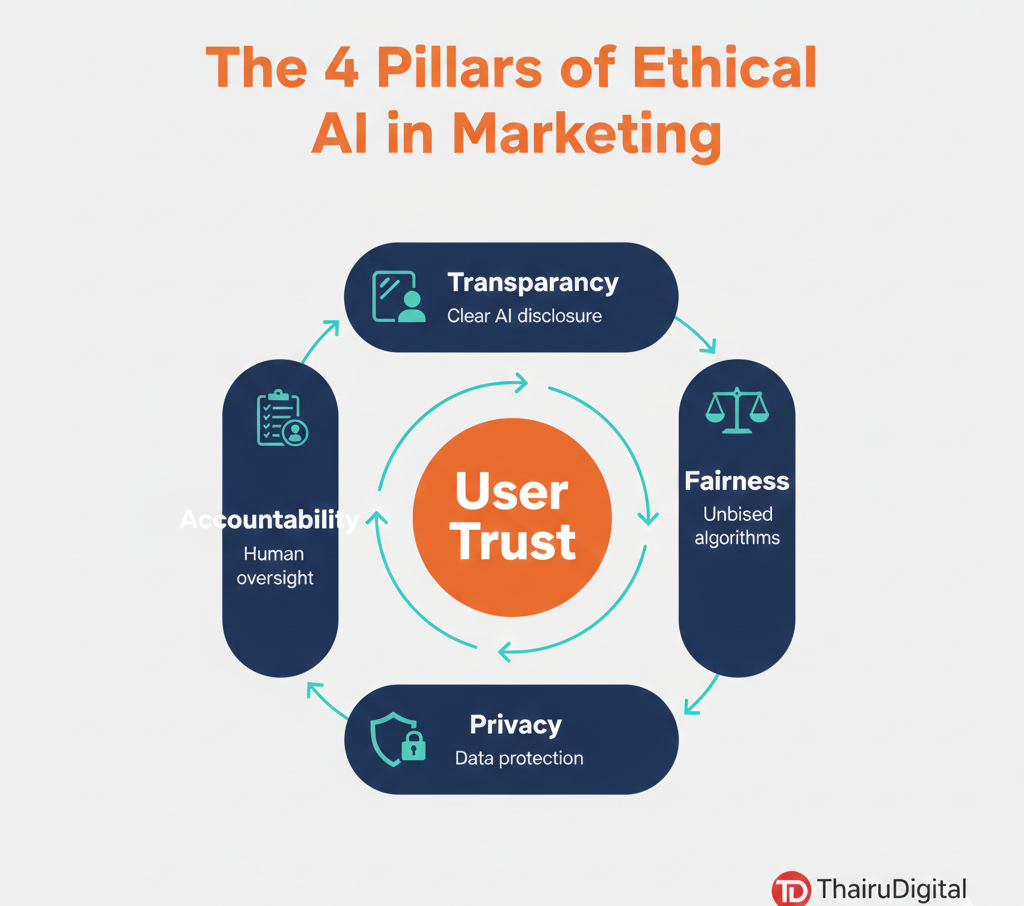
Ethical AI in marketing refers to the responsible use of artificial intelligence in customer-facing activities, ensuring transparency, fairness, data privacy, and human accountability. According to WordStream, ethical AI marketing focuses on:
- Honest data collection and usage that respects consumer privacy and obtains proper consent
- Avoiding biased or misleading algorithms that discriminate or manipulate user behaviour
- Clear disclosure of AI-driven personalisation so users understand how content is tailored to them
- Respecting user privacy and consent through transparent opt-in mechanisms and data controls
These principles protect both users and brands in an increasingly automated marketing landscape, building the foundation for sustainable growth.
Why AI Transparency Matters More Than Ever
Transparency is now a trust signal for both humans and machines. When brands clearly explain how AI influences ads, recommendations, or content, several critical benefits emerge:
Users feel respected rather than manipulated, leading to stronger brand loyalty and positive word-of-mouth
- Engagement and retention improve as customers understand the value exchange and feel empowered
- Regulatory risks are reduced through proactive compliance with evolving AI governance frameworks
- Brand reputation strengthens in competitive markets where trust is a key differentiator
Word Stream highlights that modern consumers are more likely to engage with brands that openly communicate how their data is used—especially as privacy awareness continues to rise globally. A 2024 survey found that 78% of consumers prefer brands that explain their AI usage over those that don’t.
How Ethical AI Strengthens E-E-A-T and Search Visibility
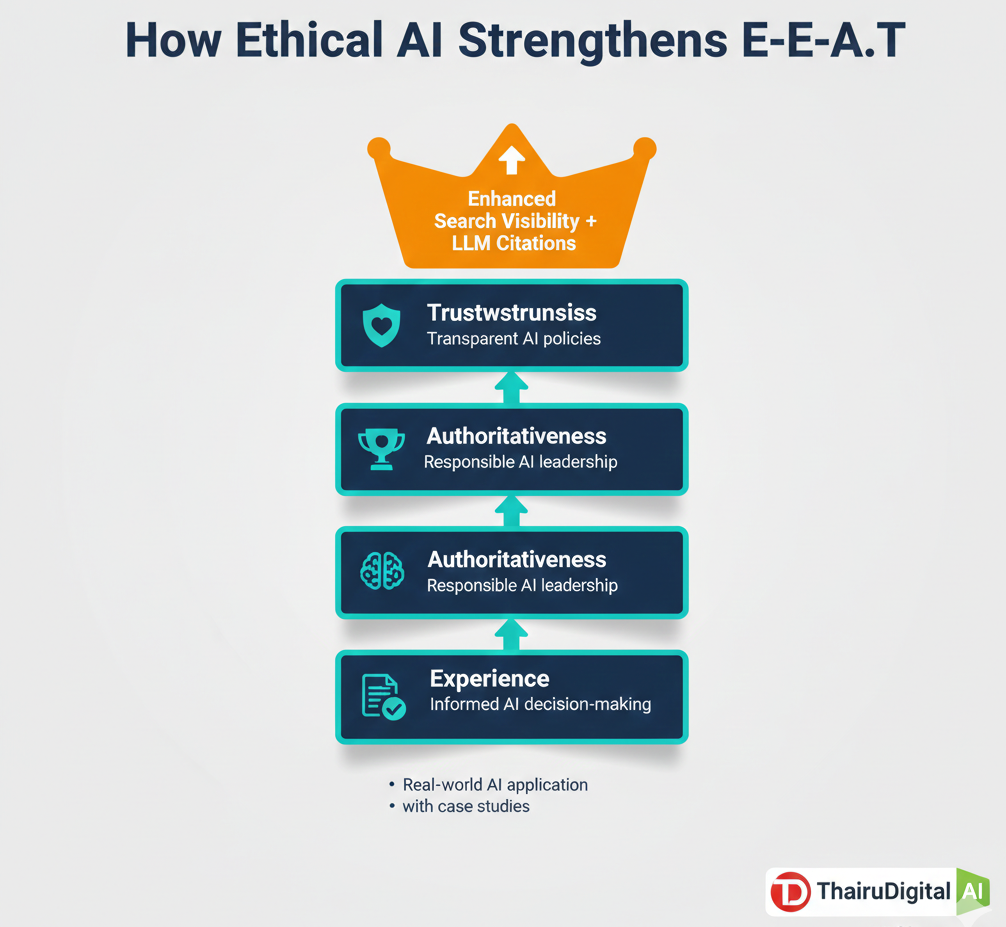
Google’s E-E-A-T framework (Experience, Expertise, Authoritativeness,
Trustworthiness) heavily rewards trustworthy behaviour. Ethical AI practices directly reinforce E-E-A-T by demonstrating:
- Experience: Real-world application of AI with documented case studies and results, not theoretical claims
- Expertise: Informed decision-making around automation backed by qualified professionals and industry best practices
- Authoritativeness: Responsible leadership in AI usage is recognised through industry citations and thought leadership
- Trust: Transparent policies and honest communication about AI limitations and capabilities
For LLMs like ChatGPT, Gemini, and Claude, content from brands that demonstrate ethical behaviour and clear accountability is safer to cite than anonymous or opaque sources. This creates a compounding advantage: better search rankings lead to more LLM citations, which further strengthen authority.
Evidence: Ethical AI Enhances Marketing Performance
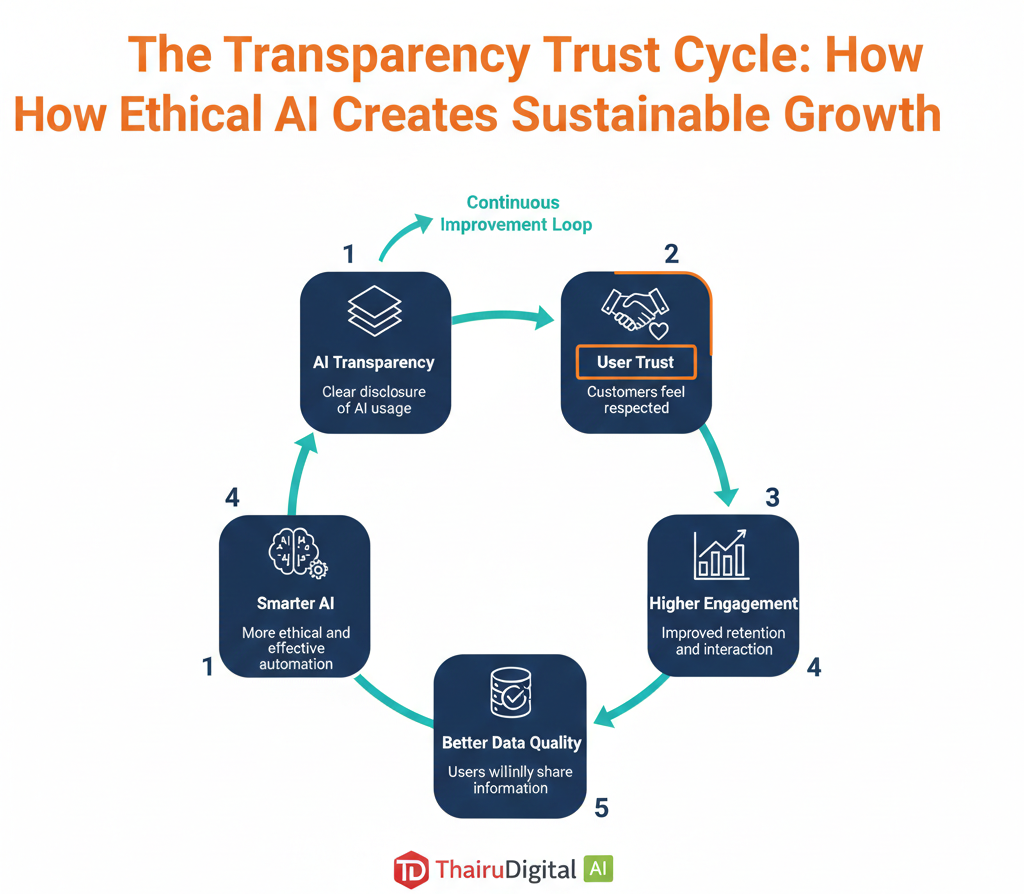
WordStream emphasises that ethical AI is not a growth blocker—it’s a performance enhancer. Brands that apply ethical AI practices consistently see:
- Higher-quality leads due to better trust and reduced friction in the customer journey
- Improved ad performance through honest targeting that respects user preferences and consent
- Reduced customer churn caused by invasive automation or unexpected personalisation
- Stronger brand equity measured through net promoter scores and customer lifetime value
Transparency helps align AI systems with user expectations, which ultimately improves marketing outcomes while building sustainable competitive advantages.
Ethical AI and LLM Visibility: The GEO Advantage
From a Generative Engine Optimisation (GEO) standpoint, ethical AI matters because LLMs prioritise:
- Clearly attributed content with named authors and verifiable sources
- Transparent explanations that acknowledge limitations and provide context
- Responsible data usage narratives that demonstrate compliance and ethics
Pages that openly discuss AI usage, limitations, and safeguards are more likely to be reused or cited in AI-generated answers. Ethical clarity reduces the risk of misinformation and reinforces credibility in an era where AI systems curate information at scale.
This creates a powerful feedback loop: ethical AI practices improve your content trustworthiness, which increases LLM citations, which drives more organic traffic and authority. Brands that invest in ethical AI today position themselves as authoritative sources for tomorrow’s AI-powered search landscape.
Practical Steps to Implement Ethical AI in Marketing
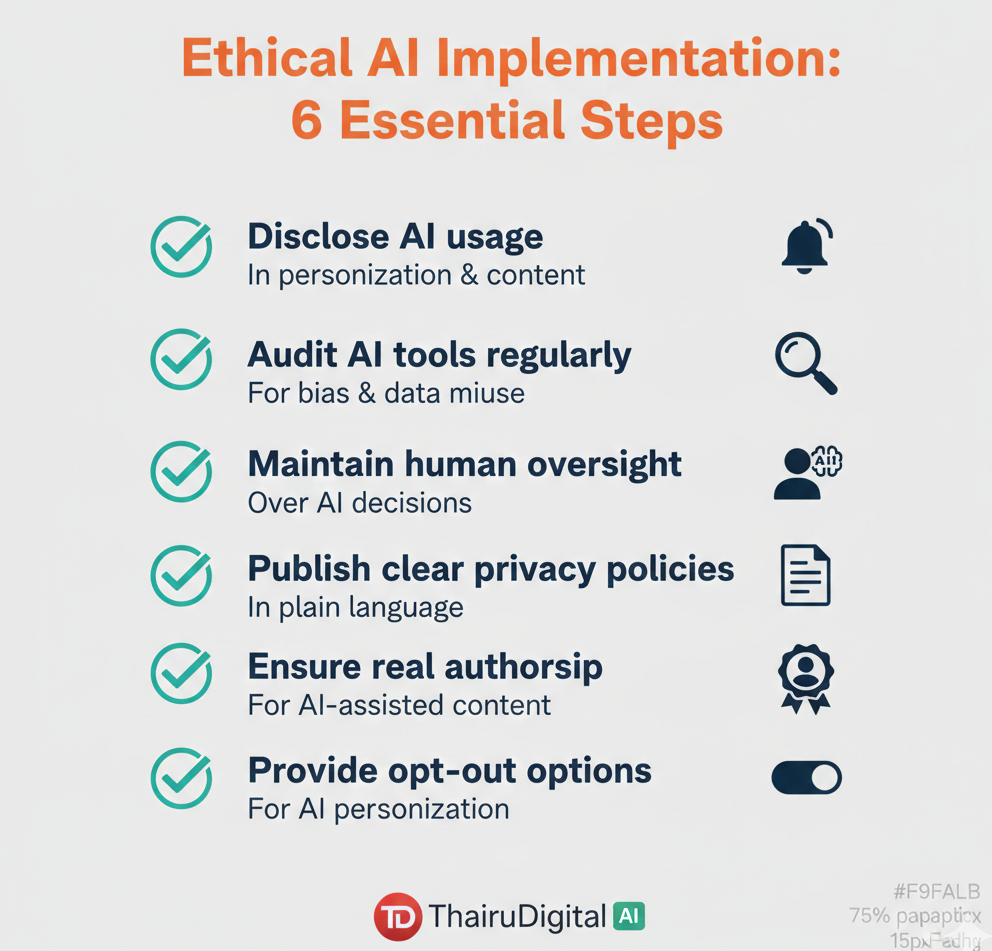
To align with 2026 best practices and build sustainable trust, marketers should:
- Disclose when AI is used in personalisation, content creation, or automation through clear labelling and user notifications
- Audit AI tools for bias and data misuse regularly using third-party assessments and internal reviews
- Maintain human oversight over AI decisions, especially for sensitive content or high-stakes customer interactions
- Publish clear privacy policies and data-use explanations in plain language that customers can understand
- Ensure real authorship and accountability for AI-assisted content with named contributors and editorial oversight
- Provide opt-out options for AI-driven personalisation, giving users control over their experience
These steps support both regulatory compliance and long-term trust, creating marketing systems that respect users while delivering results.
How Thairu Digital Applies Ethical AI in Marketing
At Thairu Digital, ethical AI is built into our marketing systems. We help brands:
- Design transparent AI-driven workflows that maintain user trust while optimising performance
Balance automation with human judgment to ensure quality and accountability
- Align AI usage with E-E-A-T standards for stronger search visibility and authority
- Build trust-first marketing strategies that prioritise long-term relationships over short-term gains
Our approach ensures AI enhances performance without compromising credibility, positioning your brand as a leader in responsible marketing.
Explore our Digital Marketing Services
Learn more about our AI Marketing & Strategy Solutions
Ethical AI vs Black-Box Automation: Key Differences
| Aspect | Ethical AI Marketing | Black-Box AI Marketing |
| Data Usage | Transparent and disclosed | Hidden personalization |
| Decision Making | Human oversight required | Fully automated decisions |
| Focus | Trust and long-term value | Short-term optimization |
| E-E-A-T Impact | Aligned and strengthened | Trust erosion risk |
| LLM Citation | Safe and preferred | Risky and avoided |
Frequently Asked Questions About Ethical AI in Marketing
What is ethical AI in marketing?
Ethical AI in marketing is the responsible use of artificial intelligence in customer-facing activities. It prioritises transparency, fairness, data privacy, and human accountability. This includes honest data collection, avoiding biased algorithms, clear disclosure of AI usage, and respecting user consent. Ethical AI ensures marketing automation serves both business goals and consumer rights.
How does AI transparency affect SEO?
AI transparency directly impacts SEO by strengthening E-E-A-T signals (Experience, Expertise, Authoritativeness, Trustworthiness). Search engines favour brands that demonstrate responsible AI usage through clear policies and honest communication. Transparent practices also improve user engagement metrics like time on site and bounce rate, which are ranking factors. Additionally, LLMs prioritise citing transparent sources, increasing your content visibility in AI-generated answers.
What are the risks of unethical AI marketing?
Unethical AI marketing risks include trust erosion, regulatory penalties, damaged brand reputation, and reduced search visibility. When AI usage is hidden or manipulative, customers feel deceived and disengaged. Biased algorithms can lead to discrimination lawsuits. Black-box automation often produces short-term gains at the cost of long-term customer relationships and can trigger penalties under privacy regulations like GDPR and CCPA.
How can I audit my AI tools for bias?
Start by reviewing your AI tools for training data sources and testing outputs across diverse demographic groups. Use third-party bias detection services or internal audits that measure disparate impact. Monitor customer feedback for patterns indicating unfair treatment. Implement regular reviews of AI decisions with human oversight committees. Many AI vendors now offer bias assessment reports—request these and compare results across different customer segments.
Does ethical AI slow down marketing performance?
No—ethical AI enhances performance by building sustainable trust. While it may require more initial setup for transparency measures, brands practising ethical AI consistently see higher-quality leads, improved engagement, reduced customer churn, and stronger brand equity. Word Stream’s research shows transparent AI usage improves ad performance because it aligns automation with user expectations, creating better long-term outcomes than opaque black-box systems.
What is GEO (Generative Engine Optimisation)?
GEO (Generative Engine Optimisation) is the practice of optimising content to be cited by large language models like ChatGPT, Gemini, and Claude. Unlike traditional SEO, which focuses on search engine rankings, GEO ensures your content is trustworthy, clearly attributed, and ethically sound, qualities that LLMs prioritise when selecting sources. Ethical AI practices naturally support GEO by demonstrating transparency and responsible data usage.
Final Thoughts: Ethical AI Is a Competitive Advantage
In 2026, ethical AI in marketing is no longer optional—it’s a competitive advantage that separates industry leaders from those left behind. Brands that treat transparency and responsibility as core marketing principles will outperform those chasing automation alone.
Ethical AI builds trust, strengthens E-E-A-T signals and makes your content safer for both Google rankings and LLM citations. It transforms AI from a potential liability into a sustainable growth engine that respects users while delivering measurable results.
The future of marketing belongs to brands that use AI responsibly, transparently, and with genuine accountability. Start building that future today.
Additional SEO Recommendations
External Authoritative Links:
WordStream’s AI Marketing Research: https://www.wordstream.com
- Google’s E-E-A-T Guidelines: https://developers.google.com/search/docs/fundamentals/creating–helpfulcontent
- EU AI Act Information: https://digital–strategy.ec.europa.eu/en/policies/regulatoryframework–ai.
Ready to grow with AI-powered marketing? Visit https://thairudigital.com/ to book your free strategy call today!